


















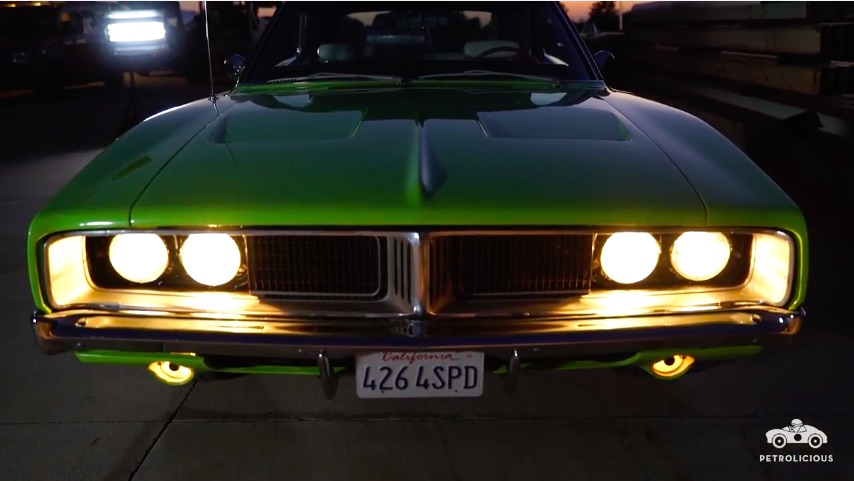
There will be argument until the end of time about this, but if you really, truly, must pin the musclecar era down to one vehicle, then it’s hard to argue against a 1969 Dodge Charger. There is something about the B-body that pulls everything together: it’s recessed grille and hidden headlights, it’s back window with the flying buttresses, it’s Hollywood career that spans decades and lots filled with wrecked Mopars, and for the love of everything, the sound of a pissed-off big-block thumping out of two pipes call up anything from The Dukes of Hazzard to street-racing on Telegraph Road, and from show cars to NASCAR racers. The 1969 Charger’s mythos as this super-supercar, the one above the others, is pretty much cemented in place.
Which means, for the typical gearhead, that finding and restoring a 1969 Charger is a genuinely expensive affair. First, you must locate one…that alone could take years. Then you have to piece together a car from whatever scraps you can find, and if you want it to look as stunning as Bromley Howser’s 1969 Hemi-powered example, you spend years getting the body back into shape. Howser dove into the project after a wreck on his motorcycle nearly sidelined him for good, mainly as an agreement with his girlfriend to get rid of the bike, and over the years, the Charger has come together the way he wants it. Mopar purists will lose their heads at the sight of a 1969 car painted 1970 SubLime because it’s not correct, but who really cares at the end of the day? Really? Howser put together the car he wanted, as he wanted it to be, and that alone is enough to tell critics to shove it.


Even down under, where XY GT HO’s, Torana A9X’s, and Charger E49’s are worshipped, a ’68 or ’69 Charger is recognised as the quintessential Muscle Car