













If you’re opening act was the absolute bombshell, the second act is kind of screwed over in a way. They will never be as good as what came first, no matter what, and they will always linger in the shadow of the former. Which offers up a bit of a thought: imagine that you are a designer, working within Ford, and you are tasked to create the followup to the monster that is the AC/Shelby Cobra. You hope that the task was given to the top designer, but it wouldn’t matter if they were day-one fresh…the curvy lines of the AC Ace body and the legend that was well established by the Cobra’s performance were in stone. What do you do?

The designer’s name was Eugene Bordinat, and sometime in the mid-1960s, when it became apparent that AC would no longer be able to supply Ace bodies, Ford gave him the order to whip up the replacement. To a critical eye, it appears that the “Bordinat Cobra” is a tarted up re-imagining of the 1962 Ford Mustang 1 mid-engined concept car. But while the body looked a bit derivitave, the chassis was not: Cobra CSX3001, a coil-sprung 427 model, underpinned the Bordinat car…which means that those skinny tires were doomed if anybody breathed in the direction of the throttle. It appeared…then disappeared into the annals of history.
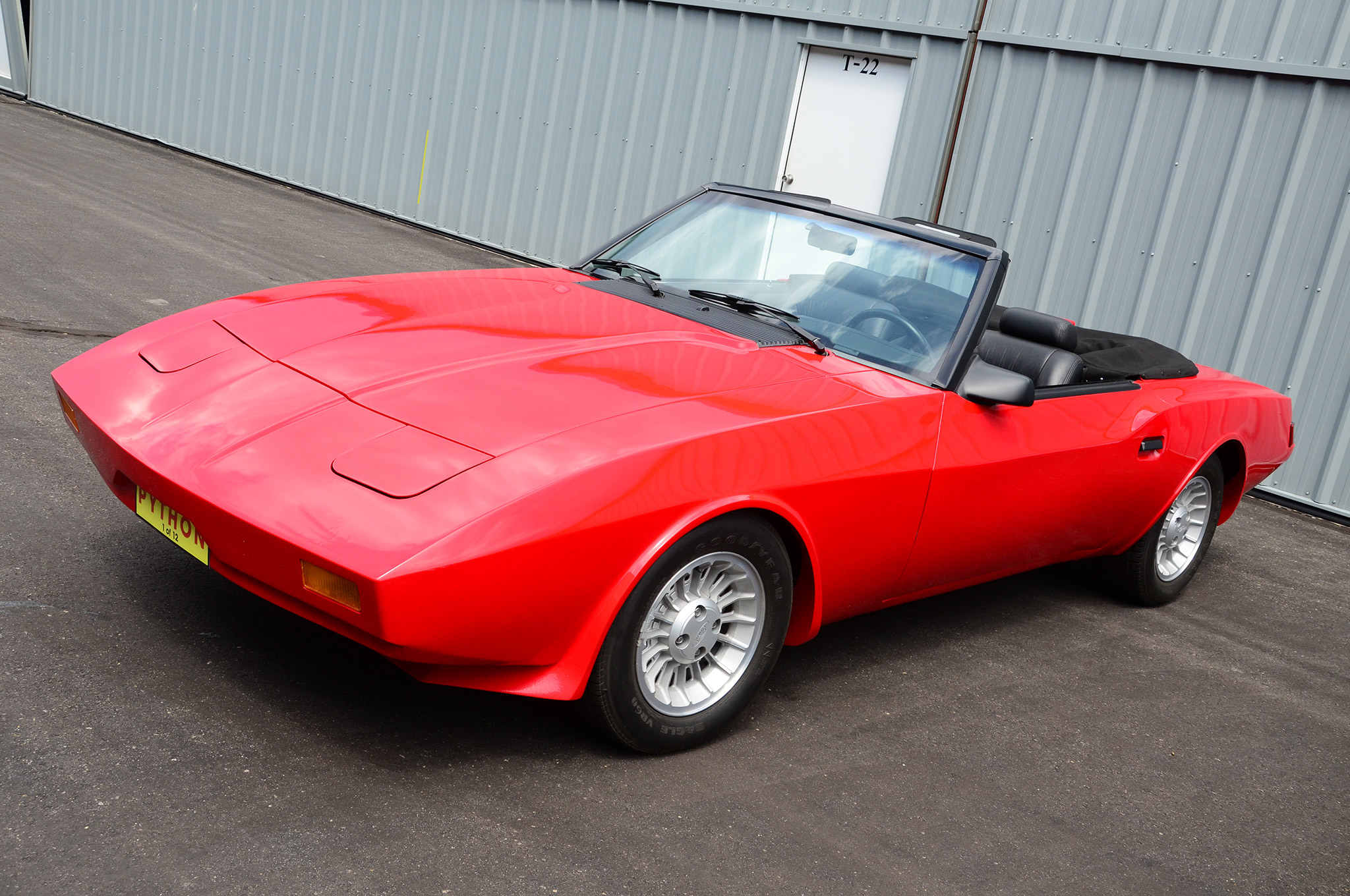
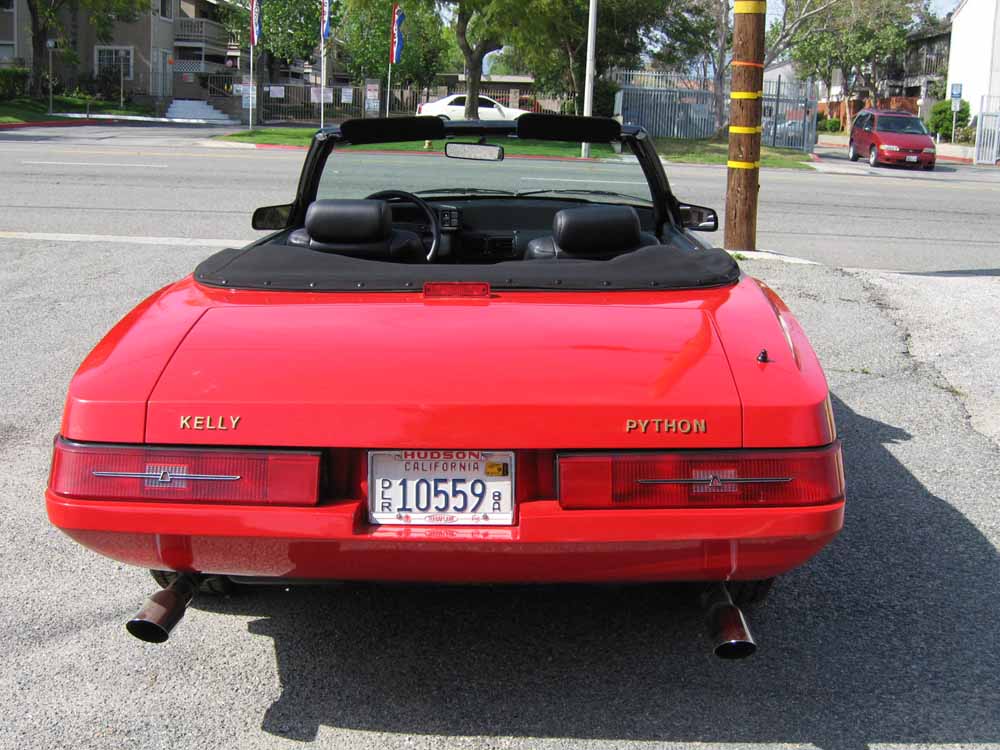
Fast-forward a decade or two, and things start to get very muddy as to what happened next, but one name is present regardless of the story, a man named Alvin A. Kelly. How he managed to create a car that was somewhat close to Bordinat’s Cobra is the mystery and one that is so misunderstood that it’s better to not think about it. Whatever the case, there certainly was inspiration behind the product that was created that came from Bordinat’s car. The end result, however, is pure 1990s. The chassis is Fox Mustang, 5.0L H.O. mill and all, and the interior is 1990 Mustang perfectly. The exterior has Ford Probe headlights, taillights from an Aerobird era Thunderbird. A plaque on the dash announces which one of the twelve Pythons produced it was (out of a planned five thousand).
Looking more like a TVR product than anything that rolled out of Ford’s plant, the twelve cars were manufactured in a Fort Collins, Colorado factory before the money dried up and the Python’s time ran out. How many exist? Who knows…with only seven made and the pedigree of a mutt, when are you likely to ever see one? It’s an interesting idea, for sure, but with absolutely nothing cemented in stone over it’s origins, it’s not like it’s packing a pedigree…it’s about a step away from being a kit car. Could it have been a take on a modern-day Cobra for the 1990s? With the Mustang on a pardon from being turned into a front-wheel-drive sport coupe and little else to offer for performance, the Python was more a flash in the pan than anything else.
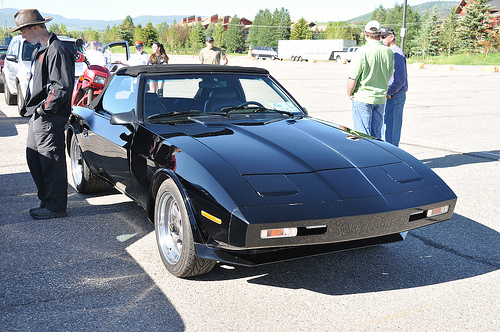


It looks kind of like an updated TR7 to me.