














Imagine you are a farmer at the beginning of the 1940s. You’re working a stretch of field near a road. You are used to Model T Fords, and have seen cars like the Ford V8 and even that new Willys, the Americar. But you then hear a loud roar coming down the road. Your eyes are not deceiving you: a stream of busses, the likes of which you have never seen before, and traveling along. At eleven feet tall and eight feet wide, they seem to take up the roadway. From afar you can plainly tell who made them, since “GM” is on the nose in huge letters. As they get closer, you notice their centrally-mounted headlights, the wraparound chrome, the noise of the roaring engines and the huge whitewall tires. As they start blasting by you the words on the side say it all:

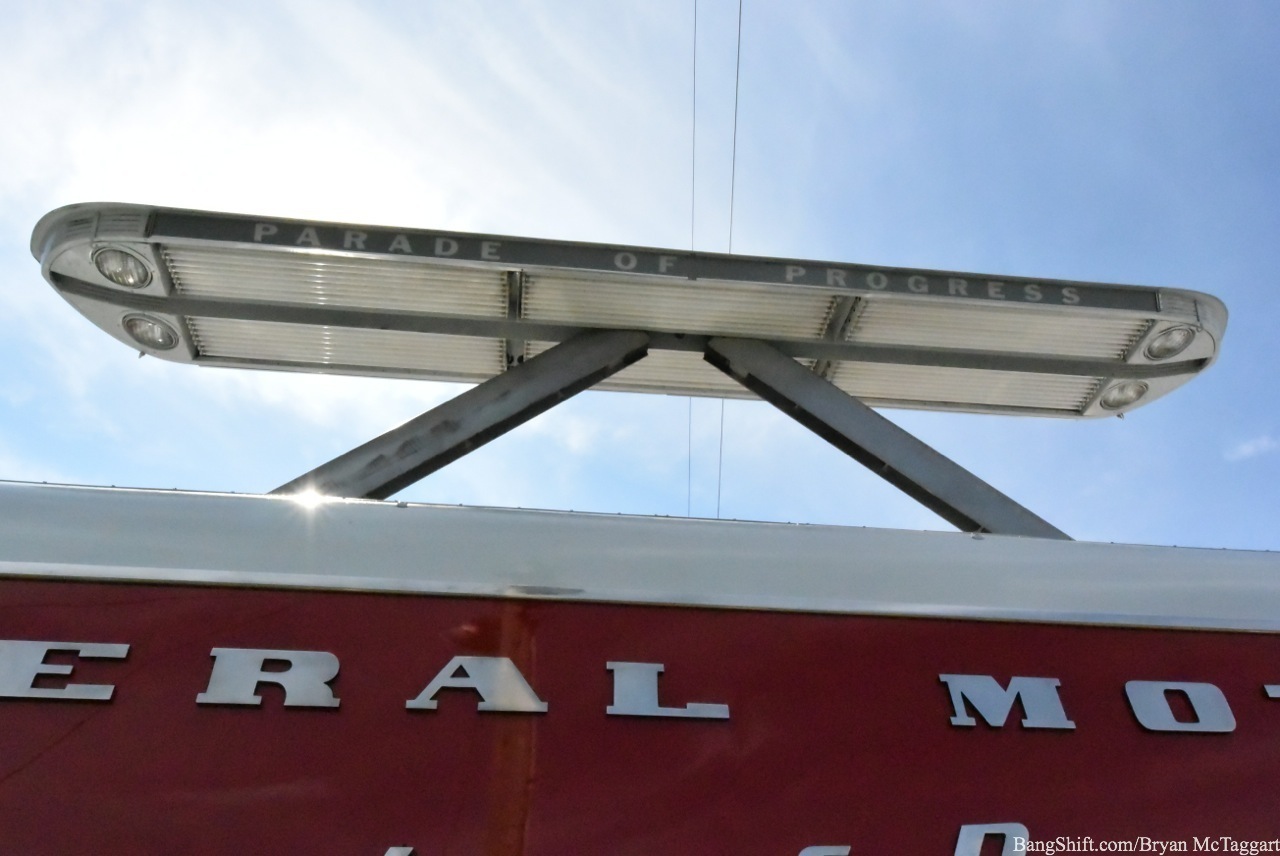
The twelve Futurliners (yes, that is spelled correctly) that made up GM’s Parade of Progress were commissioned and built in 1939, originally for the World’s Fair. Starting in 1940, the twelve busses (and follow-on trucks that packed the gigantic tent that was used in the static displays) were loaded up with displays that showcased “The World Of Tomorrow” and such features as jet engines, diesel power, microwaves, technology and stereophonic technology. Running two Parades (1940-41 and 1953-56), the Futurliners and the traveling gang of college graduates and experts traveled the country, making stops along the way.
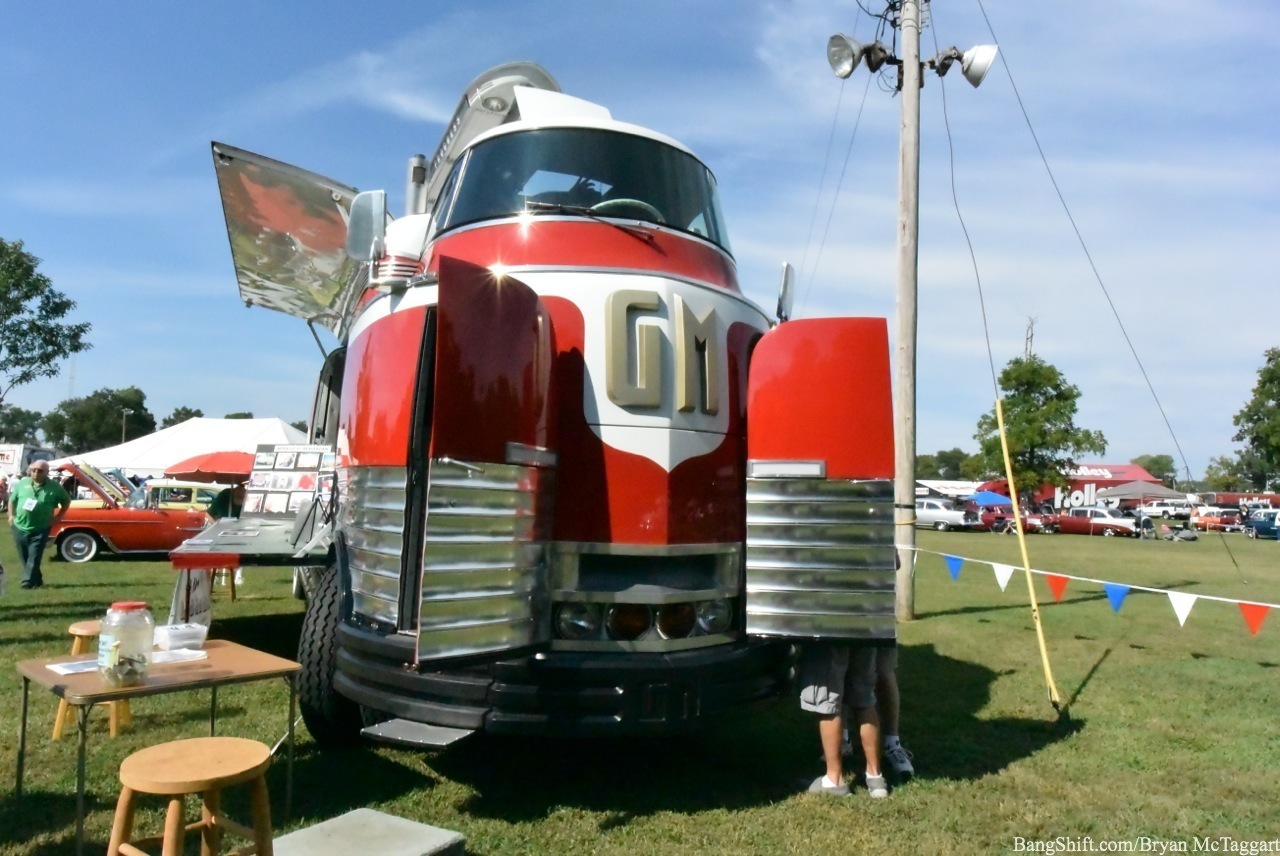


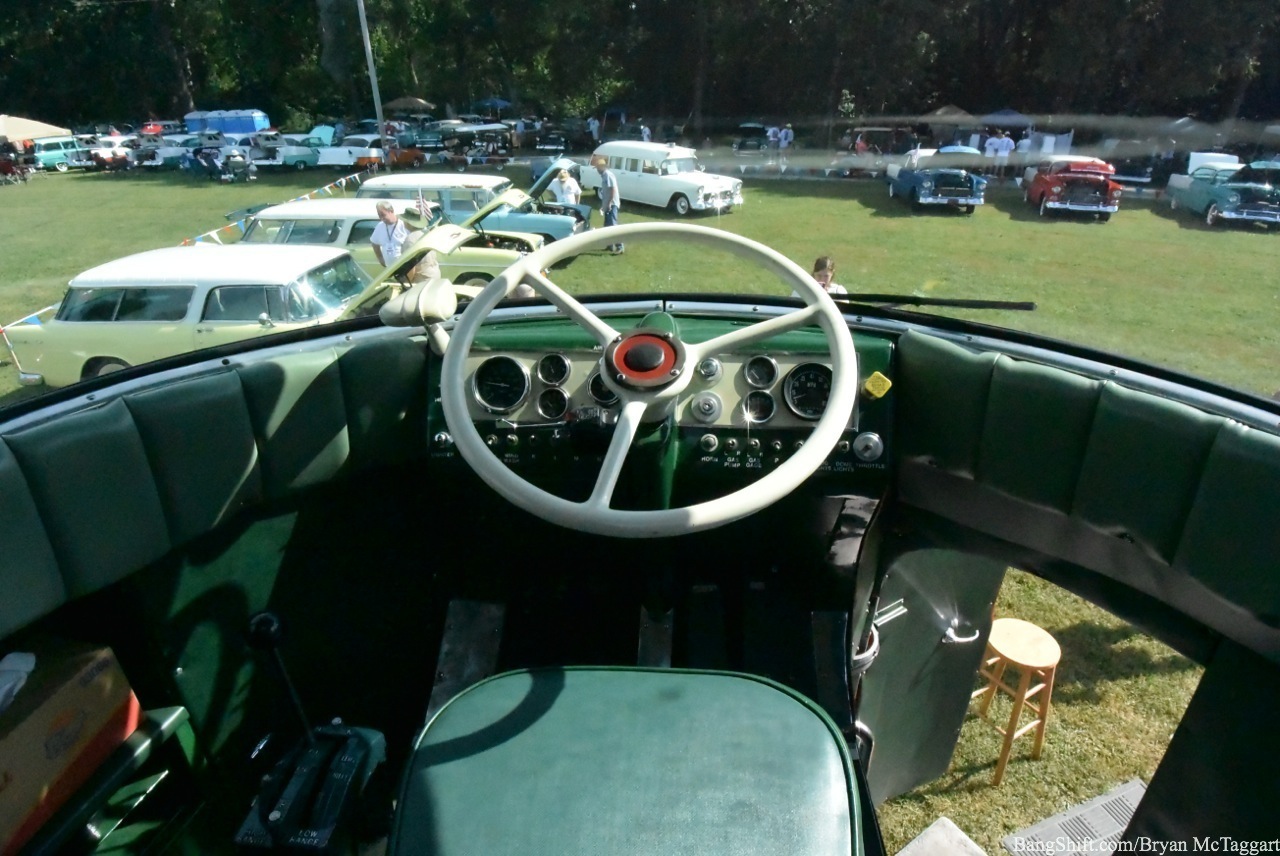
The Futurliners themselves are gorgeous. Offically, there are two “generations” of Futureliner, but they are the same vehicle. Prior to 1953, the busses were powered by a diesel four-cylinder and a four-speed manual transmission, complete with a two-speed splitter box and a two-speed rear axle. For the 1953 update, the diesel was ditched in favor of a GMC 302ci six cylinder and the four-speed manual was ditched for a Hydramatic, but Futurliners still struggled to hit 50 miles an hour. Dual wheels at all four corners supported the weight, but the front set was responsible for eating through power steering pumps. The driver sat in a central position with two passengers behind him in an enclosed canopy, which was completely clear in the first generation, making the drive hot and uncomfortable. And with the driver sitting eleven feet off of the ground, going under a bridge must have been an unnerving experience.


But nothing could compare to the Art Deco styling that the Futurliners had. From the massive appearance to the massive GM letters, everything about the Futurliner was meant to convey big, bold and new. The hubcaps were especially a bit concerning, considering that instead of another GM logo, there was the symbol for nuclear energy. Whether that was just a sign of the times or a hat tip to the future, nobody seems to know. What is known is that out of the twelve Futurliners built, nine have been located, with two of them so badly gone that they were parted to complete the restoration of others. One was converted into a car hauler, Peter Pan Bus Lines had two (including one of the parted ones) and, of course, there was the one that was sold to collector Ron Pratte for $4.1 million at Barrett-Jackson, which recently was sold again to an anonymous donor. One, purchased by evangelist Oral Roberts and converted into the “Cathedral Cruiser”, might possibly be in South America, left there after one of Roberts’ evangelical travelings.



And one is in Sweden, (Google futurliner sweden, ) Like jungle jims vega, I ve seen and heard it caccle at Kjula dragway 4-5 august this year with a manta body . Arrived to Sweden early 1976 by Bjorn Andersson & Tage Hammerman.
7,27/315 km/h at the first outing
I am in the Monterey Peninsula this week for the auctions and Pebble Beach Concours. We saw a Futureliner driving on Hwy.1 yesterday!
I am not sure where it was headed but it was not at the concours today.
In June I saw a Futurliner on a flatbed going south on HWY 605 in Los Angeles. I think it was #9.
I saw one of these at SEMA last year. I was amazed by the size of it. I figured it was huge but had no idea of the scale. These things are really really tall. I can’t image going under a bridge in that cockpit.
Super cool to see in person.