


















We’ve been hammering away at Project Raven, quite literally. The 400ci big block we picked up for $400 looked like hell when we opened it up, and we honestly had our doubts about whether or not the engine was worth continuing on, but in the end we would only find out once the machine shop got their eyes onto the block and did their checks and measurements. We needed to strip the block down and get it cleaned up and ready to go, but we had a problem. If you remember the last update, our big-block looked like we had dredged it from the bottom of a lake when we opened it up. There was rust, there was cooked oil, there was even a slug sitting in a puddle of oil on top of a cylinder. We suspected that the block was seized, and were we ever right, with cylinders 3 and 4 locked up tight. We tried soaking the pistons. We tried to be nice, using a rubber mallet and a section of mop handle, but when that failed, the call was made and we brought in some heavy-duty equipment and a lot of strength to knock those stubborn SOB’s out of their bores. The hammers swung, the words flew, and the wasps, scared for their lives, fled the old, battered shed we’re using as a garage.
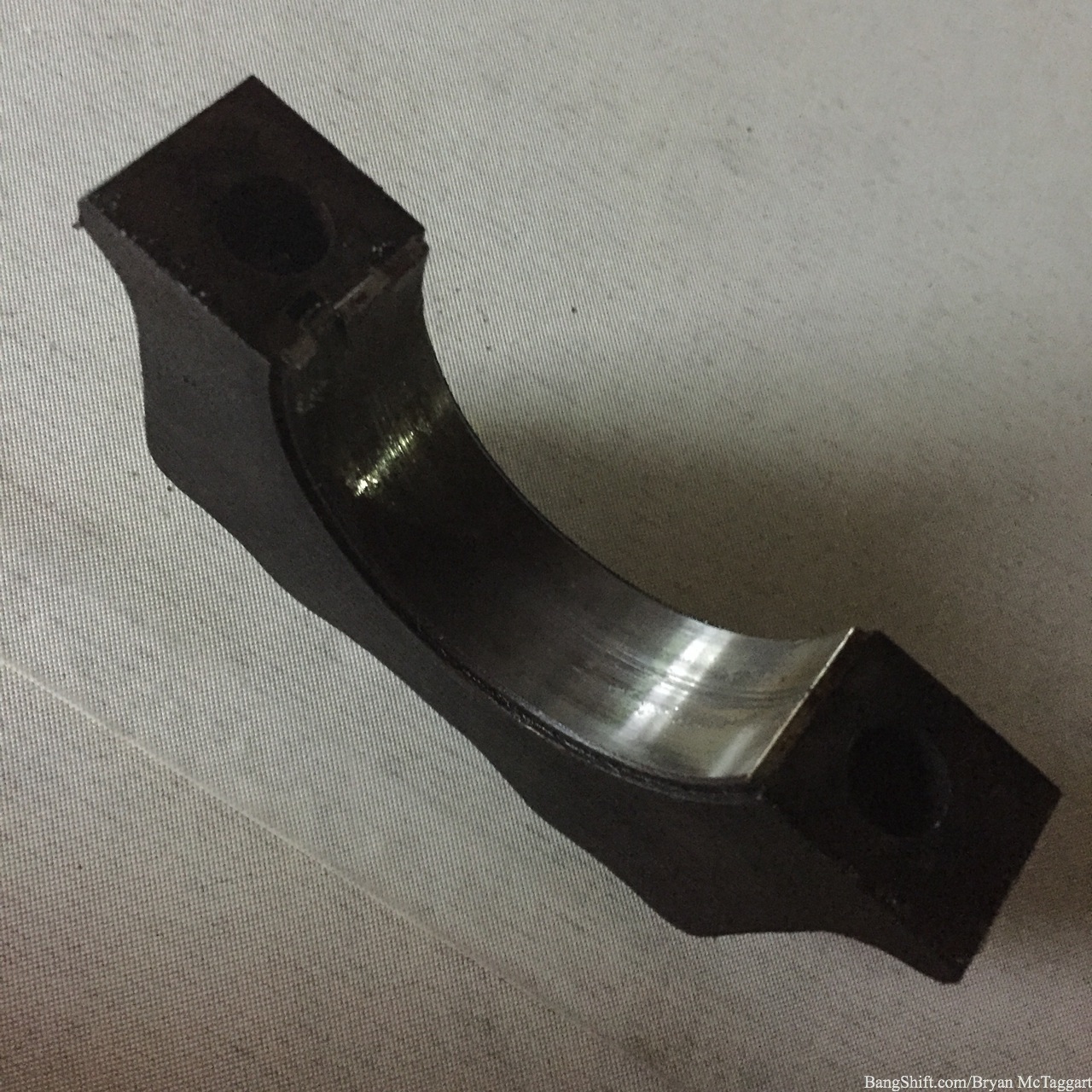
The mains weren’t in the best condition, but as bad as the 400ci has been so far, they were decent, and certainly better off than the 323ci’s mains.
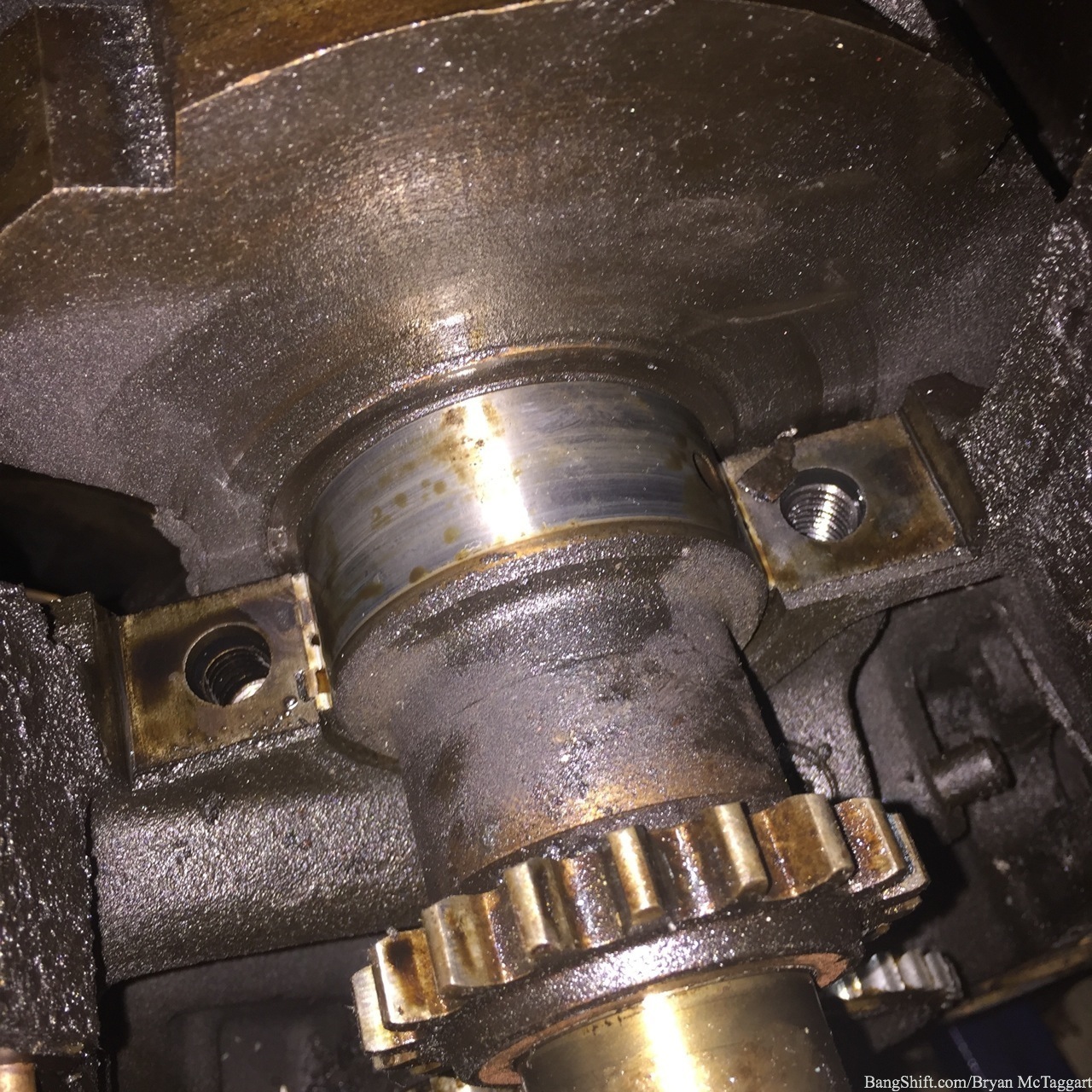
The crankshaft also looked fairly decent, although this discrepancy between bearing location and crankshaft position doesn’t look great. Then again, when this photo was taken (late at night) I may have moved the crank and not noticed. Don’t read into this one yet.

The only concern on the crankshaft I have is the bit of rust on the counterweight here. The crank went into the machine shop with the block to make sure everything is a-OK with it.
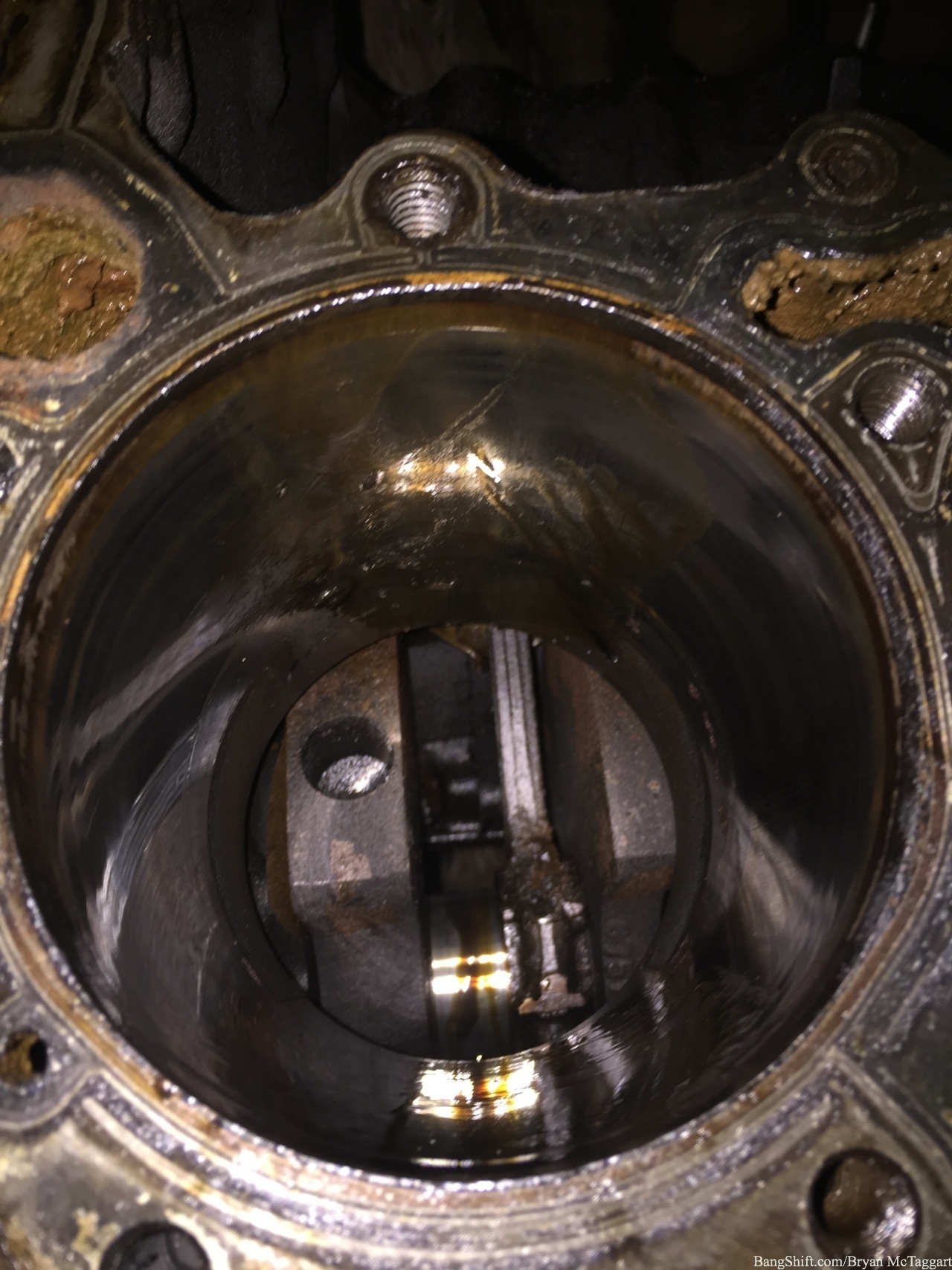
Three cylinders (6,7,and 8) came out easily and looked like they only needed a basic honing and ridge reaming to be put back into service.
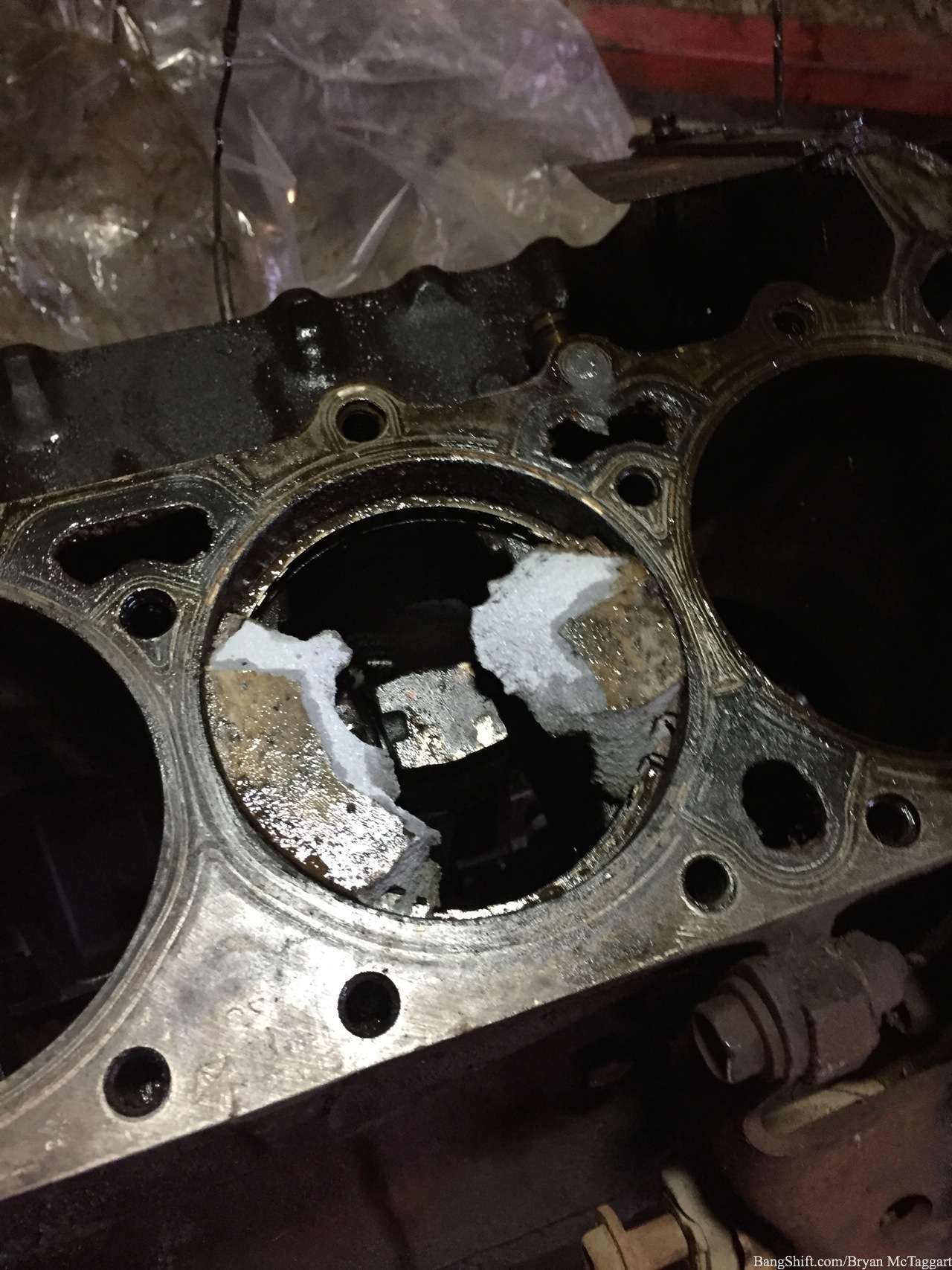
The remainder of the cylinders refused to budge with a section of mop handle and a rubber mallet, so I upped the offensive: steel yard spikes and a 2.5-pound hammer. Cylinders 1, 2 and 5 came out with minimal work. Cylinders 3 and 4 fought, and ended up requiring my Plan B: an 8-pound sledgehammer. #3 came out in two pieces. #4 (pictured) came out in…well, many pieces.
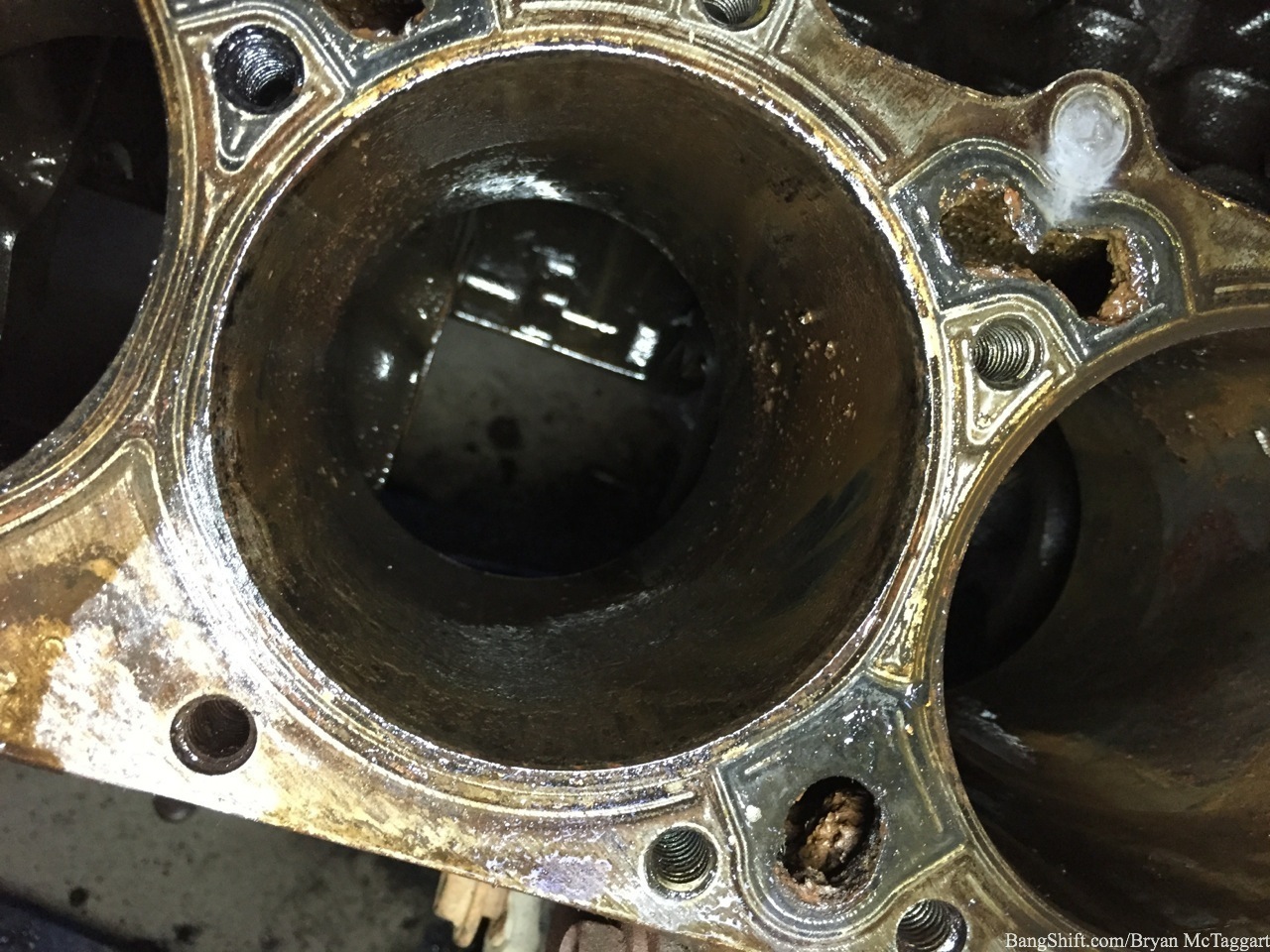
#4 is my biggest worry. Here you can see just how jacked up the cylinder walls are. Hopefully this block will bore out, otherwise it’s going to be used as a mock-up block.
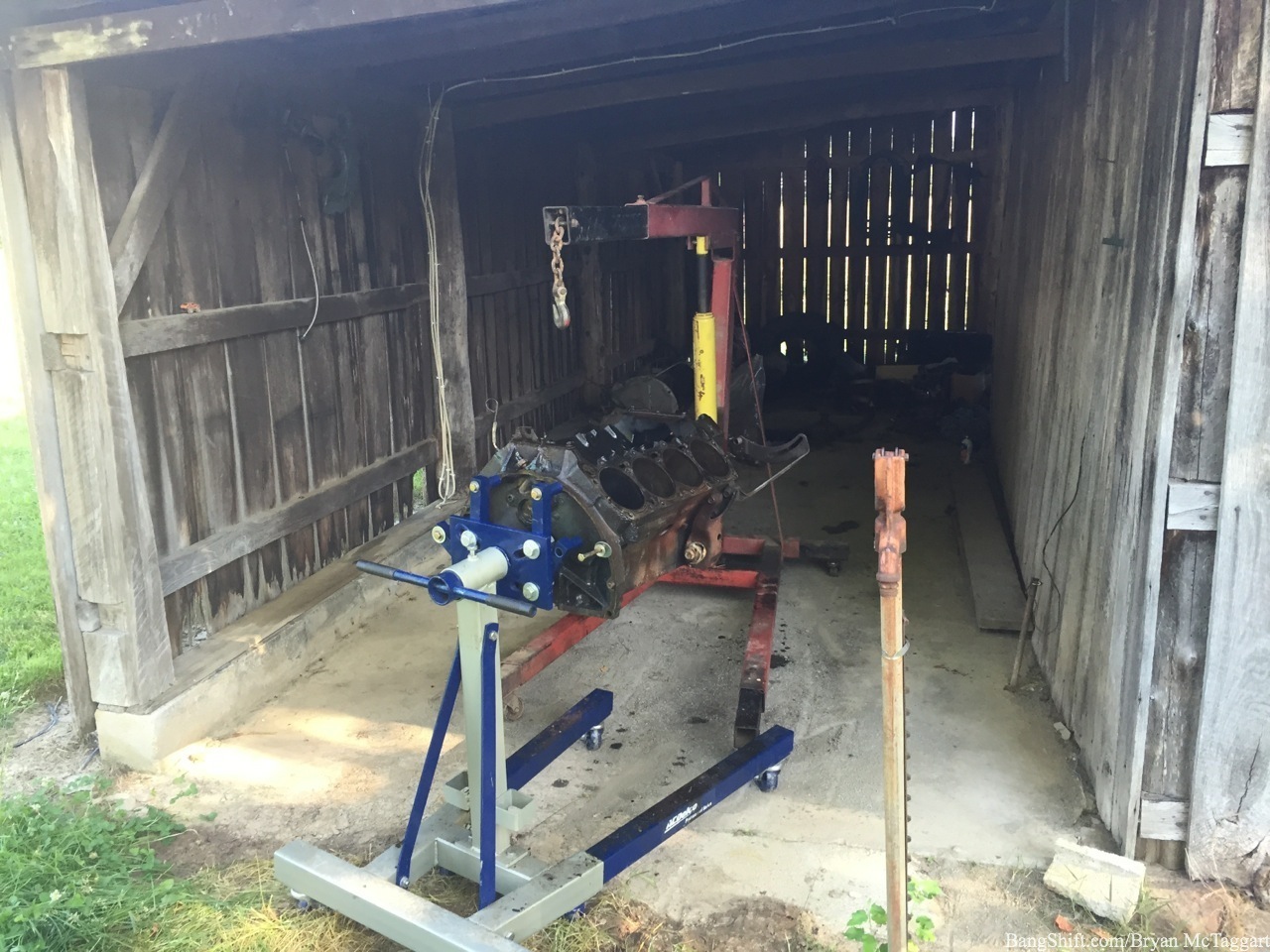
Finally, the 400 was moved out of Wasp Haven and sent to the machine shop. The shop isn’t exactly optimistic, but they are doing their due diligence and will let me know in a couple of weeks just how bad or good the Chrysler block is. Why a couple of weeks? The stack of cylinder blocks lined up inside the shop tells me this year has been rough for the racers…
Meanwhile, we finally turned our attention back to the Imperial itself. It’s sat in the driveway mostly unbothered, and it would’ve continued to sit unbothered if it weren’t for a plea from a Facebook group member: did anybody have any silver Imperial carpet that they could spare for a project? Once I saw that, something I’d been tossing around in my brain came up to the surface. The 1981-83 Imperials were sold with what can only be described as mouse fur carpeting. It’s not shag, even though it’s long enough; it’s not silky, but it does require combing; and in the grand scheme of things, it’s a pain in the ass to maintain. I don’t know what Lee Iacocca was thinking when he approved this crap, but if I can make one guy’s day while getting rid of carpet made of Persian Rat hides, so be it. “Why does anyone need this carpet?” you may be asking yourself. Here’s the answer:

The only special edition Imperial ever offered was the Frank Sinatra edition. Yes, it’s as tacky as you think: the cars were painted Glacier blue (the same color as old Frank’s eyes) and this little console was added to the interior. When sold new, the console was filled with cassette tapes of Ol’ Blue Eyes’ music. I get the feeling that Iacocca had a man-crush on Frank that borderlined on “creepy”. Maybe he just liked the music. Whatever the case, these consoles are a nice touch and finding one in good condition is like a needle in a haystack. One guy just got one and refinished it to his liking, but his car isn’t light blue inside, it’s silver like mine.
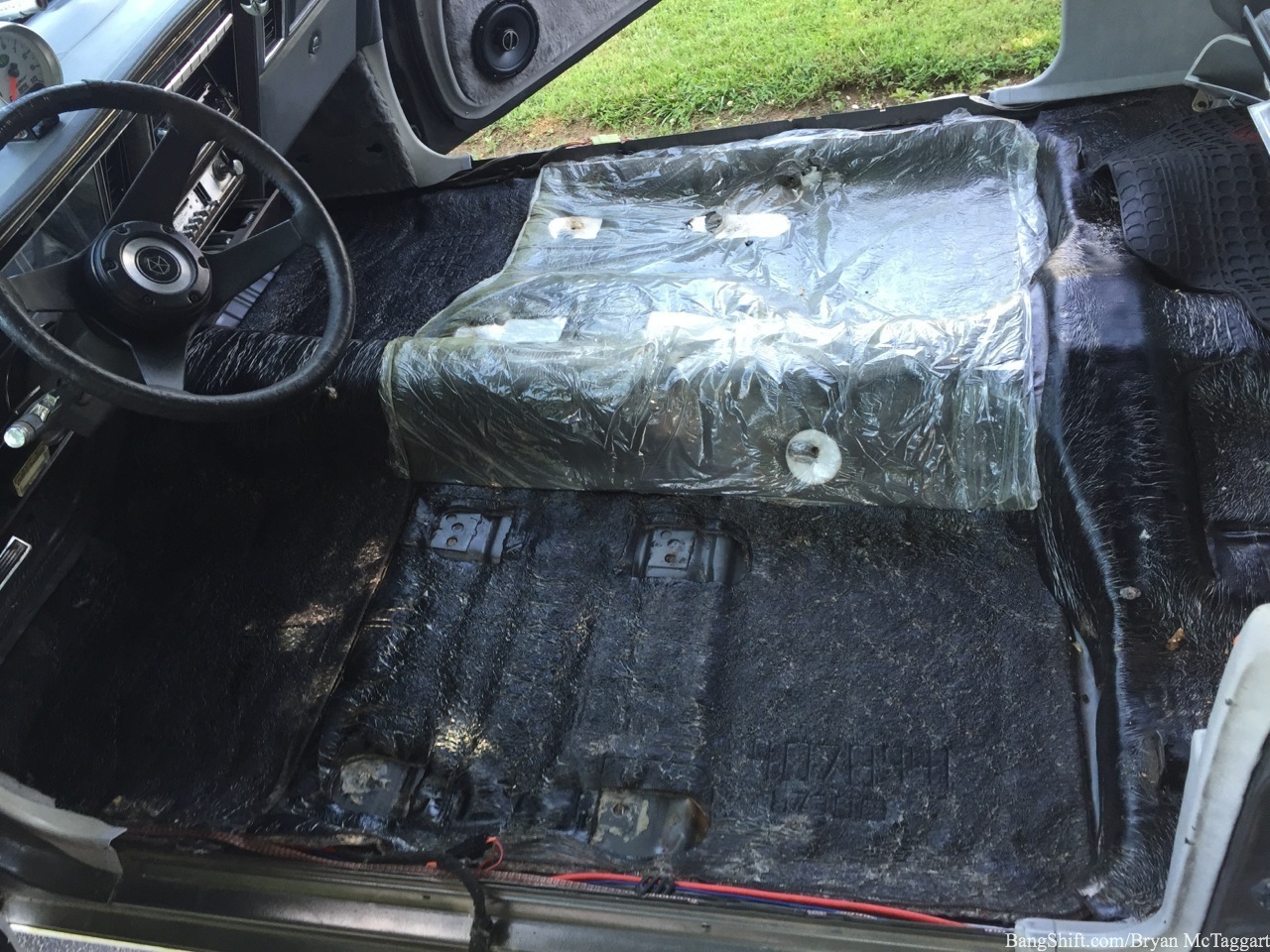
The calling card of Chrysler quiet: a metric ton of tar-matting on the metal. Of course we found this when pulling the carpet, but seeing it in this nice of a condition is a very pleasant find. Currently, we’re on the fence about ditching it just yet. We might just lay a more traditional (and durable, and easier to clean) carpet on top.
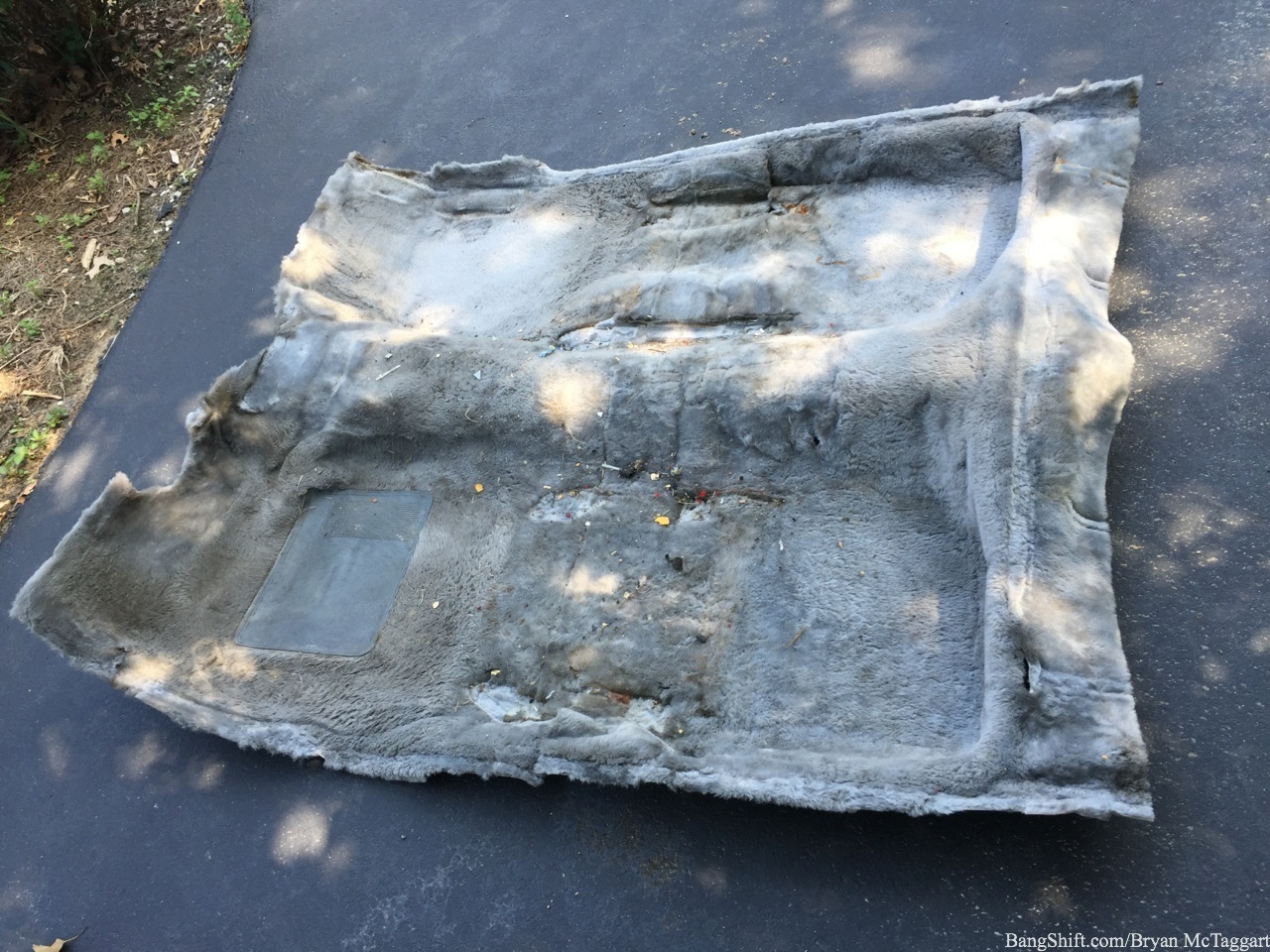
Nobody knows how many Persian Rats were killed to make this carpet, but its time in the Imperial is done. When cleaned and brushed out it looks pimp, but when the Imperial is used like a real car, it gets nasty.
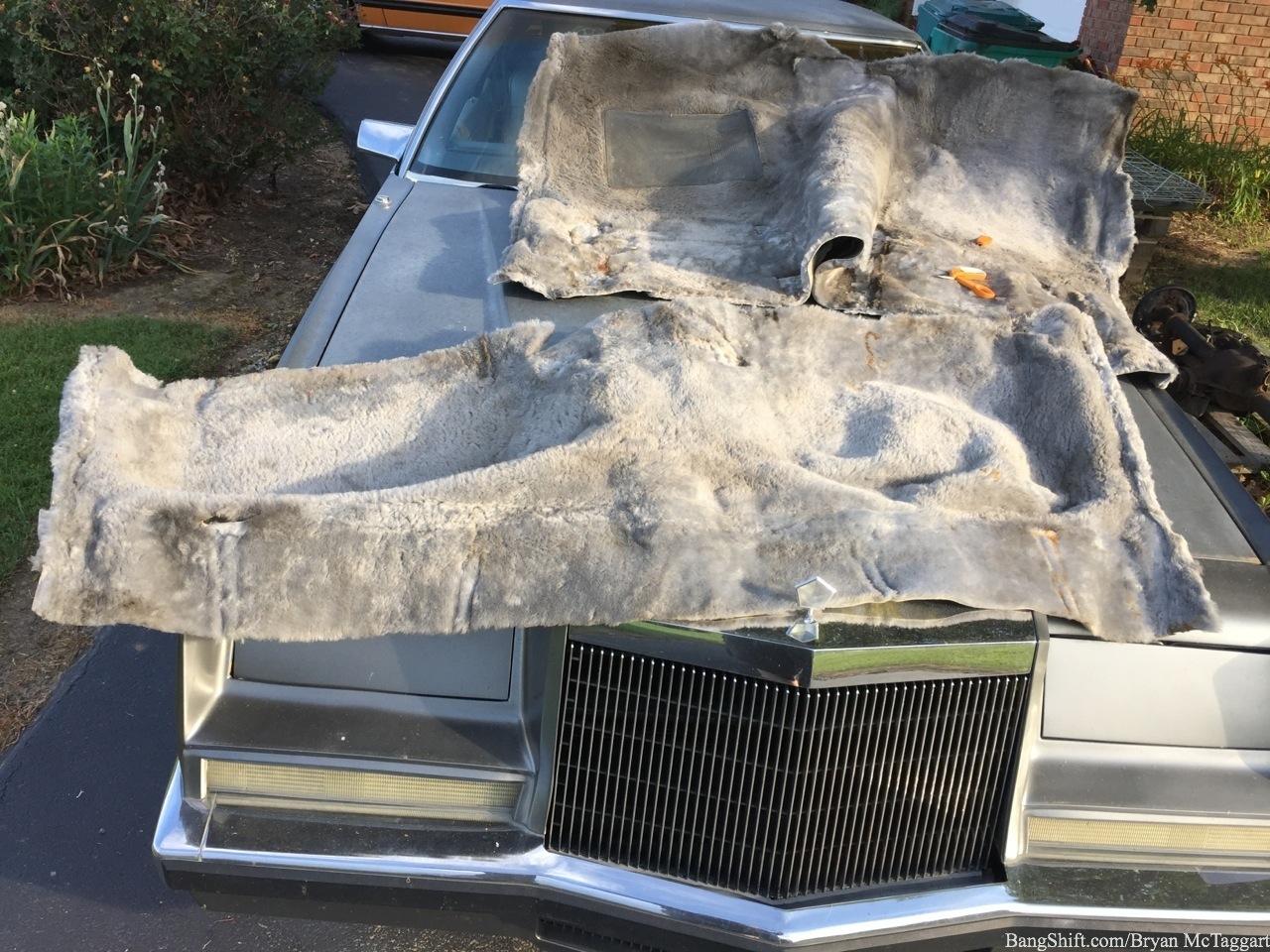
The nicest part was the rear passenger section, so I just cut straight across, vacuumed it and mailed it off. Best of luck!
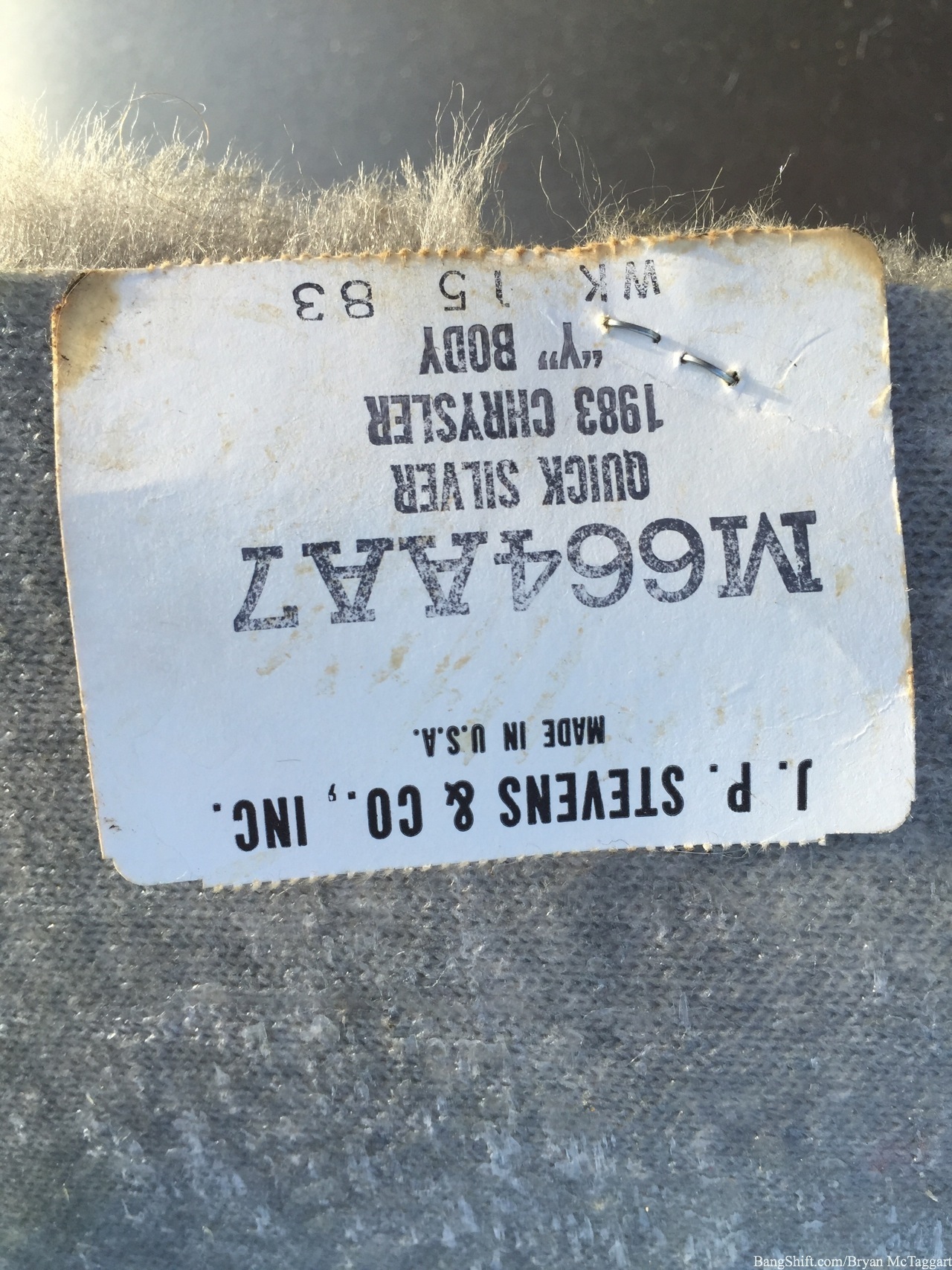
This was a pretty cool find: a lot of the factory tags were still on the carpet, and were in good condition. Sure, it shows just how much I’m like a typical Mopar guy, but seeing these little details is always cool. Two notes: the “AA7” code matches the car’s DuPont paint code (Metallic Charcoal Silver) and note the “Y” body designation…officially, these are J-body cars, but Y-body was the classic Imperial body designation. There is actually an argument over which is correct…seriously. People argue over this stuff.
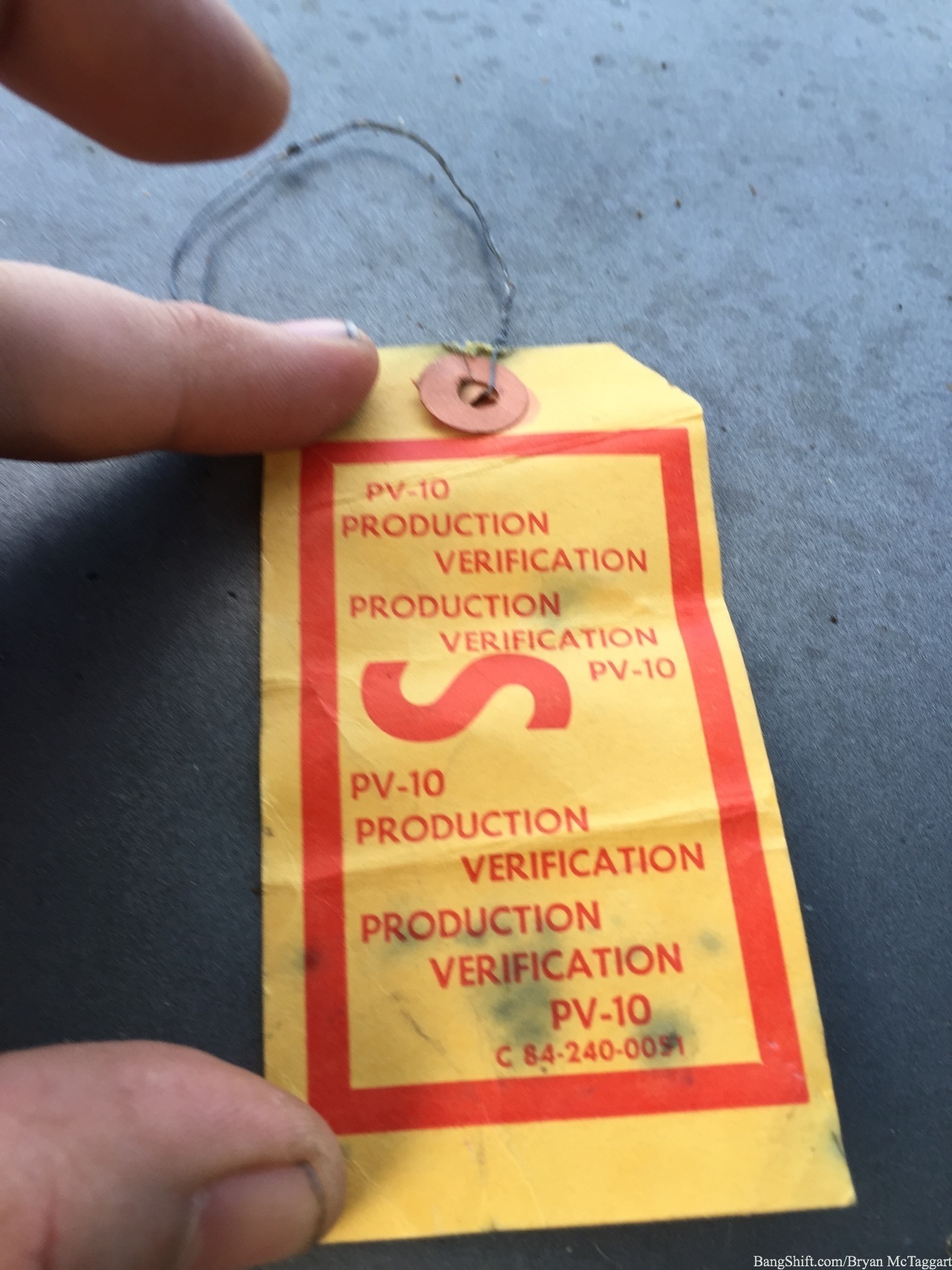
Several of these tags fell out as well. The Imperials were built on a separate line from Mirada and Cordoba. Chrysler was dead serious about the quality of these cars…you had to have at least 20 years seniority and be approved by higher-up to even set foot on the Imperial line, and every stage of production had an aviation-like check station to make sure everything was properly installed. Shame the electronic fuel injection was such a temperamental bastard, because they really did try with these cars.


JP Stevens and Company made the carpet in my ’70 Caprice too. I found that tag, but no build sheet.
Keep the sound deadening, you can always roll the windows down when you want more noise.
Good luck on the engine, I hope it cleans up for you. If it does, a stroker crank goes very well with the overbore.
I was there when “ol blue eyes” got his Imperial at Mcpeek Chrysler Plymouth in Anaheim California, I was working heavy line at the time. Even the Transmission was “balanced” in these cars. They were surely a stand out sitting next to the K bodies on the lot.