

















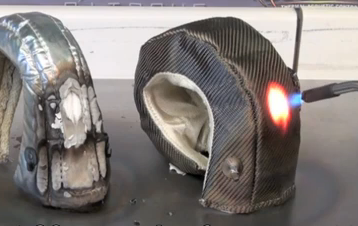
Design Engineering’s line of heat management products is vast. From their spark plug boot protectors through header wrap, and into their turbo shields, these guys know how to keep heat where it belongs and this demonstration is clear proof of that. In this test, the DEI Titanium Turbo Shield and an unnamed turbo heat shielding product are set on a table with a timer behind them. In the most basic method of demonstration possible, a torch is lit and direct flame is applied to both pieces. First it is 15-seconds of moving flame and then it is 15 seconds of direct, concentrated hellfire. The same process is repeated on the insides of both items as well.
Unless you have parked your car in the devil’s executive spot, or have done a real bad job of plumbing your fuel system, chances are that under hood temps are not going to reach 3,000-degrees but it is pretty good peace of mind to know that the products you are using can withstand that type of punishment. Truth be told, at the MPMC conference Chad and I attended a week or two ago, I slid some of DEI’s heat wrap on my finger and Chad took a lighter to it. The DEI guys were laughing because most of the people that show up to these meeting sit on the couch and ask the same questions. Us? We try to set each other on fire. Thats’s how we roll.
If you’re in the market for a turbo heat shield and you’re on the fence on which way you should go with your purchase, watch this video and then pull the trigger on one of these bad boys. How hardcore is this stuff? Here’s what DEI says about it on their site:
Made from pulverized volcanic rock then strained into a fiber material, Titanium Turbo Shields can withstand direct heat up to 1800 F and 2500 F radiant heat. This means retaining more heat in the turbine and less damaging underhood heat. The result is a cooler air intake temperature and a boost in horsepower!


