


















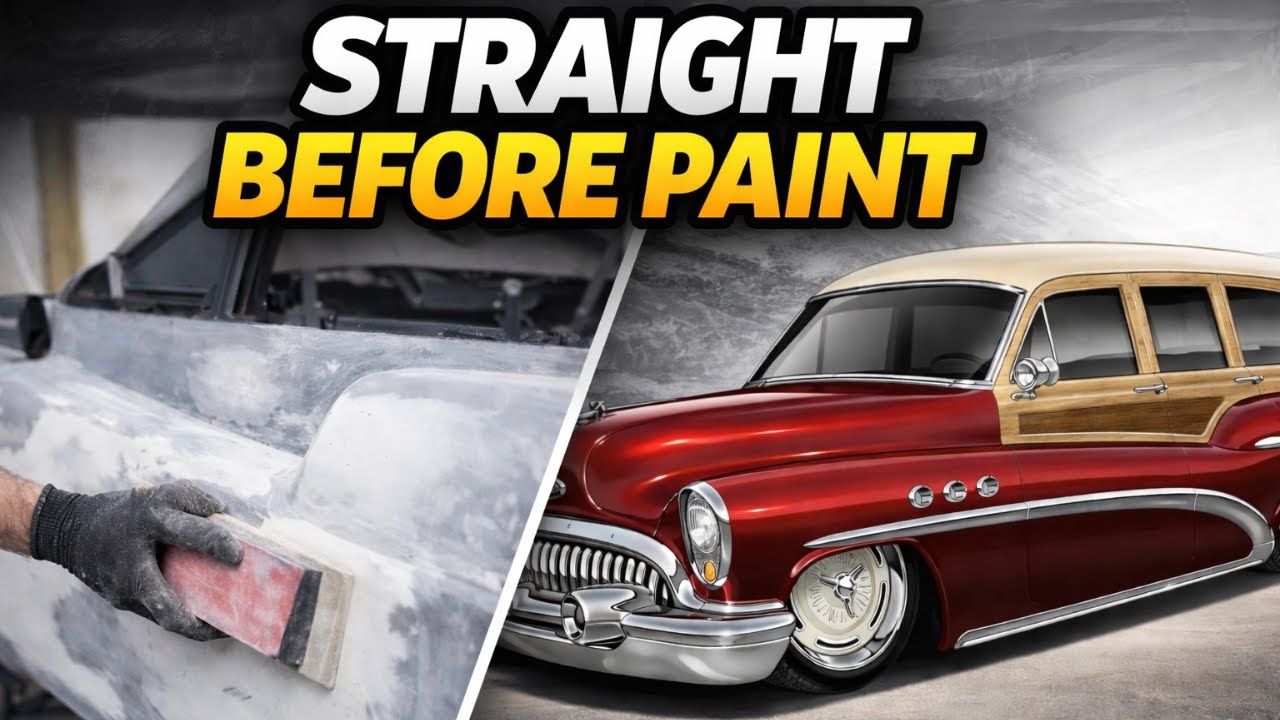
Everyone knows that if you want a car’s paint job to look nice you need to sand every body panel until it is as straight as possible. But what does “straight” actually mean when you are talking about big, long, curved panels? What about big, long, straight panels? Does it mean the same thing? There might be a bit more to this than you think. Watch the video below for more, as Jeremy Bumpus explains what straight really means when it comes to finishing bodywork.
Video Description:
A panel can feel straight in the shop and still look wavy the moment it hits reflection.
In this video, I walk through how I approach block sanding for show-quality bodywork — not by rushing filler, but by understanding panel shape, block choice, and what the surface is actually telling you.
Body filler is a refining tool, not a shortcut. If the metal isn’t as straight as possible first, no amount of sanding will save the panel — and the block will eventually expose it.
This is where show-quality separates from work that only looks good indoors.
What I cover in this video:
• Why panels can feel straight but still read wavy
• The relationship between metal shape, filler, and block choice
• Why block length matters
• How hand pressure creates (or hides) waves
• What I’m looking for before a panel ever sees paint
This isn’t about steps — it’s about judgment.
The block doesn’t fix the panel.
It tells you the truth about it.
If you’re chasing long-term, show-quality results, this is the step you don’t rush.


