






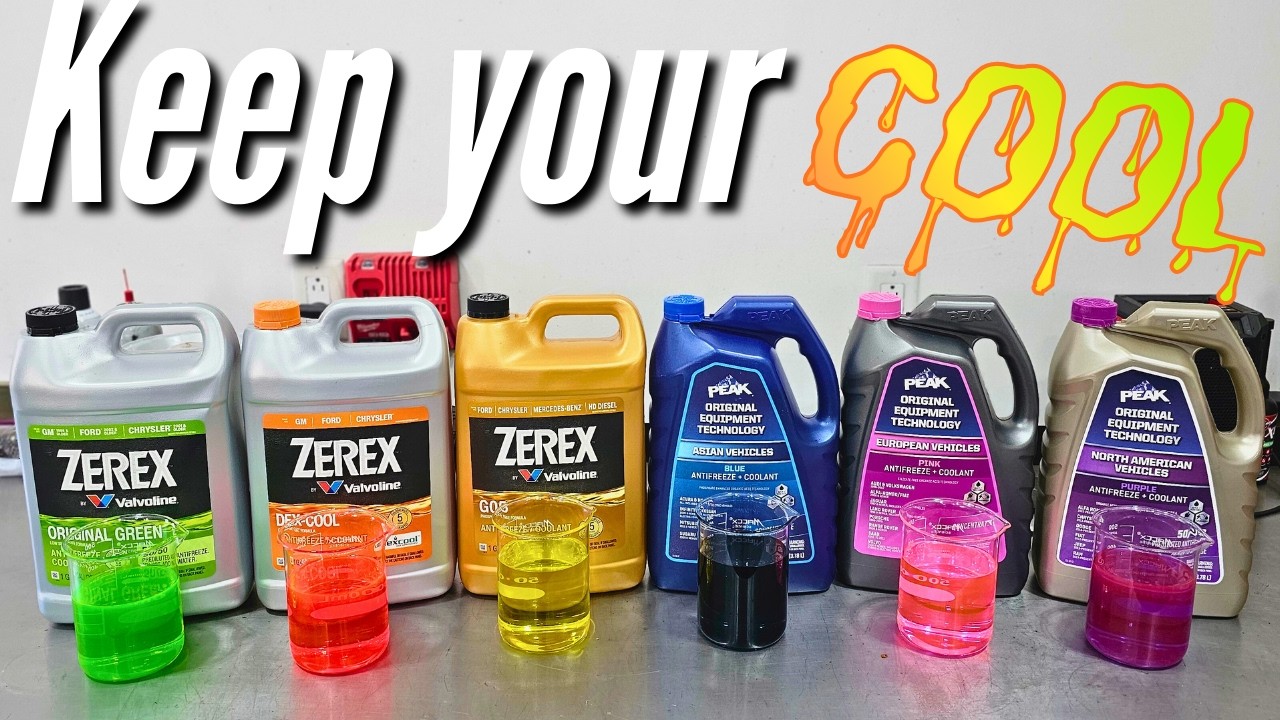
Why the heck are there so many colors of engine coolant nowadays? I mean was there really a problem with green? And if the colors matter so much, why can you buy coolant that will work with any of them? None of this makes sense!
Video Description:
Why are there so many different engine coolant colors — green, orange, yellow, pink, blue, purple — and why does your car care so much about which one you use?
In this video, we do a deep dive into engine coolant chemistry, explaining why different coolants exist, what they’re designed to protect, and what actually happens if you use the wrong one. This isn’t about color — it’s about corrosion protection, aluminum compatibility, water pump life, and modern engine design.
We break down every major coolant type, including:
IAT (traditional green coolant)
OAT (Dex-Cool style coolants)
HOAT (hybrid organic acid technology)
P-OAT (phosphate organic acid technology)
SI-OAT and other modern hybrid formulas
You’ll learn how coolant really prevents corrosion, why some coolants protect instantly while others work locally over time, and how water pumps, seals, and mixed metals factor into coolant choice.
We’ll also explain:
Why modern engines can’t all use the same coolant
Why “universal coolant” is a compromise
Why mixing coolants can shorten component life
What coolant actually lubricates inside a water pump
How aluminum, iron, and mixed metals change coolant requirements
If you’ve ever wondered why manufacturers moved away from old green coolant, or why a coolant change can cause problems years later, this video will connect all the dots.


